WEBINAR
Share:

Cybersecurity for SaMD, SiMD, and AIaMD

  • Format
    Instant Streaming
  • Duration
    75 Minutes
  • Faculty
    Carolyn Troiano
  • Course ID
    TF1032

REGISTRATION OPTIONS

US $290  |  SINGLE ACCESS
One participant (viewer) | 30 Days Streaming access
US $490  |  TEAM ACCESS
2 - 5 participants | 30 Days Streaming access for Each Member
US $690 |  COPORATE ACCESS
6 - 10 participants | 30-Day Streaming access for Each Member
Registration to this Course Includes:
  • Live Q&A + Post-live Continued Learning
  • Presentation Handout & Templates
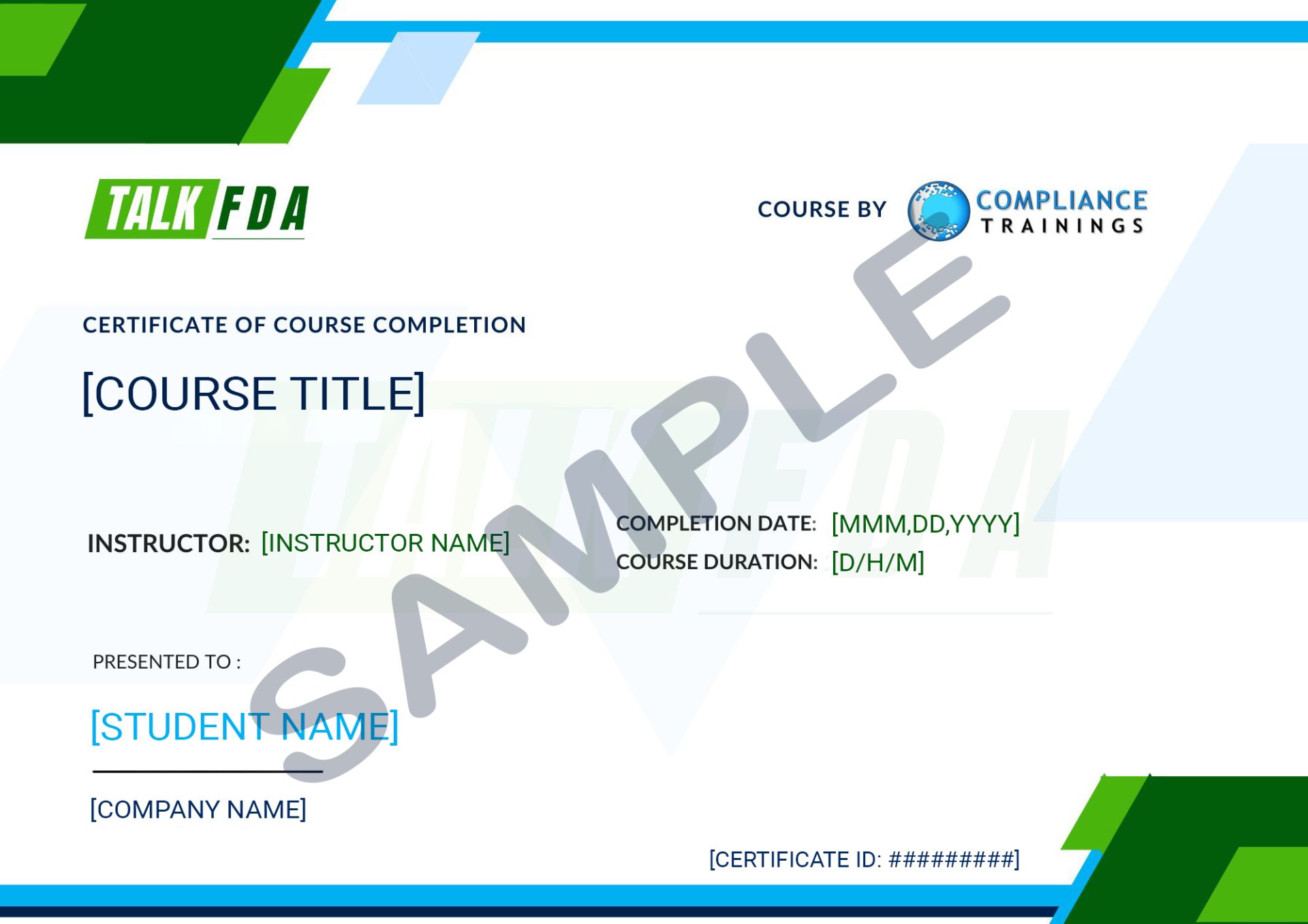
  • Assessment & Certification

TalkFDA Membership

Be a part of the exclusive community
Explore how membership complements your learning
This webinar addresses how medical device manufacturers maintain cybersecurity throughout the lifecycle of SaMD, SiMD, and AI-enabled devices, covering third-party software vulnerabilities, patches, security testing, change impact assessments, and decisions on when existing risk controls and regulatory evidence require reassessment.

Why take this course?

Cybersecurity risks continue to evolve after medical device software is released. New vulnerabilities may emerge in third-party libraries, operating systems, communication interfaces, or embedded software components, even when the manufacturer's own code remains unchanged. Software as a Medical Device (SaMD), software in medical devices (SiMD), and AI-enabled medical devices introduce different dependencies and attack surfaces that manufacturers must address through ongoing cybersecurity risk management. 


Responding to newly identified vulnerabilities requires more than deploying patches or updating software components. Manufacturers must assess exploitability, potential patient harm, the effectiveness of existing security controls, and whether proposed changes introduce additional risks. Security updates may also affect device functionality, verification evidence, or regulatory obligations. This webinar addresses how to prioritize vulnerabilities, justify remediation decisions, establish appropriate testing, and maintain defensible cybersecurity documentation throughout the device lifecycle. 

Making Defensible Cybersecurity Decisions After Software Release 

The session focuses on determining when newly discovered vulnerabilities, software dependencies, or security updates require additional risk assessment and verification. Particular attention is given to distinguishing cybersecurity maintenance from changes that may affect device safety, performance, intended functionality, or existing regulatory evidence. 

Managing Vulnerabilities, Updates, and Cybersecurity Change Control 

Practical scenarios follow vulnerabilities from initial detection through impact assessment, remediation planning, implementation, and verification. The session connects software bills of materials, third-party component monitoring, patch validation, residual risk assessment, and regulatory change evaluation, including additional considerations for AI-enabled device software. 

Key Areas Covered

  • Cybersecurity lifecycle obligations for SaMD, SiMD, and AIaMD
  • Tracking vulnerabilities across third-party software and device dependencies
  • Using software bills of materials for vulnerability impact assessments
  • Assessing exploitability, patient safety consequences, and residual cybersecurity risks 
  • Prioritizing security patches and documenting alternative risk mitigations 
  • Verifying software updates without compromising device safety or performance 
  • Reassessing cybersecurity controls following AI model and software changes 
  • Determining regulatory implications of postmarket cybersecurity modifications

Who Must Attend

  • Information Technology Departments 
  • Research & Development Departments 
  • Software Engineering Departments 
  • Product Security Departments
  • Quality Assurance Departments
  • Regulatory Affairs Departments
  • Cybersecurity Risk Management Teams
  • Medical Device Software Validation Specialists
  • Postmarket Surveillance Professionals 
Write your awesome label here.
COURSE DIRECTOR

Carolyn Troiano

Carolyn Troiano has more than 45 years of experience in computer system validation across pharmaceutical, medical device, biotechnology, and other FDA-regulated industries. Her consulting and training work spans FDA compliance, CSV, 21 CFR Part 11, Data Integrity, and large-scale IT implementations, directly supporting the risk-based validation and modern GxP system considerations addressed in this course.

If you would like to request a Proforma invoice to sign up for this course. please click here

Commonly Asked Questions About This Subject

The following questions address practical regulatory, compliance, validation, quality, operational, and inspection-related considerations commonly associated with this subject.

How should a medical device manufacturer respond when a critical vulnerability is discovered in a third-party software component but no exploitation has been reported?

The manufacturer should assess whether the vulnerable component creates a credible pathway to compromise device safety, performance, or essential clinical functionality. The absence of reported exploitation provides limited assurance, particularly when the device's exposure and available attack paths have not been established. 


A vulnerability in an operating system, communication library, or embedded component may receive a critical severity rating even though exploitation requires conditions that the device does not permit. Conversely, a vulnerability with a lower published severity may become consequential when it affects a device function essential to patient care. 


The assessment should establish whether the affected component and version are present, whether the vulnerable functionality is reachable, what protections exist, and what could happen if those protections failed. 


A defensible decision may support immediate remediation, compensating controls, or continued monitoring, depending on the evidence. 


Inspection concerns arise when manufacturers rely entirely on published vulnerability scores or vendor statements without examining their own device architecture, intended use, and potential patient harm. 

What should happen when a cybersecurity patch resolves a known vulnerability but introduces uncertainty about device performance or clinical functionality? 

The patch should undergo an impact assessment that considers both the security benefit and the possibility of introducing new safety or performance problems. A successful security scan does not establish that the updated device continues to perform its intended clinical functions correctly. 


Consider a patch to an operating system or communication library used by a connected medical device. The patch may eliminate a known vulnerability while changing timing behavior, network connectivity, data handling, or compatibility with other software components. 


Testing should address the functions and interfaces plausibly affected by the modification, including relevant failure conditions. For AI-enabled devices, changes to software dependencies may also warrant evaluation of preprocessing, inference behavior, or output consistency. 


Where immediate deployment is unsafe or technically impractical, the manufacturer should assess alternative mitigations and document the residual risk while remediation proceeds. 


A weak change record confirms that the vulnerability was eliminated but provides little evidence that device performance remains acceptable. The release decision needs to support both conclusions. 

How can manufacturers determine whether a newly disclosed software vulnerability affects devices already deployed when their software bill of materials is incomplete or outdated? 

An incomplete software bill of materials creates uncertainty that must be resolved through additional technical investigation. The manufacturer cannot safely conclude that deployed devices are unaffected simply because the vulnerable component does not appear in the available inventory. 


Software dependencies may be embedded within vendor packages, inherited through other libraries, or incorporated into firmware and operating system distributions. Different device configurations and software versions can further complicate the assessment. 


Engineering teams may need to examine build records, dependency manifests, supplier information, released software packages, and configuration histories to establish which deployed versions contain the affected component. 


The investigation should distinguish confirmed exposure, confirmed absence, and unresolved status. That distinction matters when decisions about remediation priority, customer communication, or additional protective measures depend on the affected population. 


A recurring weakness is updating the SBOM for the next software release without establishing the exposure of devices already in service. 


A defensible vulnerability assessment identifies the deployed configurations examined, the evidence supporting the conclusions, and how remaining inventory gaps are being addressed. 

When does a postmarket cybersecurity modification require reassessment of existing regulatory evidence or a new regulatory submission? 

The manufacturer should evaluate whether the modification affects device safety, effectiveness, intended functionality, or assumptions supporting the existing regulatory authorization. A change described internally as a security update may have consequences beyond cybersecurity maintenance. 


For example, introducing stronger authentication could alter access to time-critical clinical functions. Changing communication protocols could affect interoperability, while replacing a software component might modify data processing or device behavior. 


The assessment should examine the nature of the change, its effect on existing risk controls, and whether previous verification and validation evidence remains applicable. The regulatory implications depend on the device, applicable jurisdiction, and characteristics of the modification. 


For AI-enabled devices, changes to supporting software or computational environments may also require assessment of model performance and previously established operating conditions. 


A weak justification treats every cybersecurity update as routine maintenance without evaluating its functional consequences. 


The documented decision should connect the technical impact assessment with the applicable regulatory change criteria, explaining whether additional verification, updated documentation, or a new submission is required.

Your TalkFDA Webinar Experience

When you reserve your seat, everything is organized for you — from access to certification from one place.

1. Confirmation

You receive a confirmation email and your course appears instantly in your TalkFDA dashboard.

2. Your Course Hub
Your TalkFDA course page becomes your central hub where you can join the session, access materials, and manage your learning.

3. Join the Live Training
At the scheduled time, click Join Session and you’ll be connected to the live Webex session with the instructor.

4. Watch Again Anytime
After the session, the playback becomes available on the same course page so you can revisit important sections.
5. Earn Your Certificate
Complete the course and your certificate is unlocked automatically in your learning history.

Everything related to your webinar: access, materials, playback, and certification — lives in one place.
Simple. Organized. Professional.
Go ahead and reserve your seat with confidence.

Built on 20+ years of global regulatory training experience across FDA, EMA, MHRA, and ICH frameworks.
Trusted by professionals across 80+ countries.

Testimonials

This is an upcoming session. Feedback below reflects experiences from similar programs delivered by our expert faculty.

“Session was easy to follow even for non-core team members. That helped.”
- Production Officer
“Good balance. Not too basic, not too deep. Worked well for mixed team.”
- Manager, Regulatory Affairs
“Team found it useful. Especially for aligning understanding across functions.”
- Director, Operations

Ready to Strengthen Your Team? Let’s Build Your Training Plan.

Whether you’re looking for a single onsite workshop or a multi-team training series, we’ll help you design a program that fits your goals, timelines, and operational reality.

Your team deserves the clarity.
Your organization deserves the confidence.

Upcoming Courses

Featured Courses