LIVE WEBINAR

WEBINAR - INSTANT STREAMING ACCESS

.addeventatc { background-color:#49b40c!important; color:#ffffff!important; font-size:13px!important; padding:6px 20px 6px 12px!important; /* extra right padding for icon */ border-radius:6px!important; display:inline-flex!important; align-items:center!important; gap:6px!important; /* spacing between text and icon */ position:relative!important; } /* Icon fix */ .addeventatc .addeventatc_icon { position:absolute!important; right:10px!important; /* push icon to right edge */ width:12px!important; height:12px!important; background:url(https://cdn.addevent.com/libs/imgs/icon-calendar-fff-t1.svg) no-repeat center center!important; background-size:14px!important; }
Share:

AI for CAPA and Investigations:
Where It Helps and Where It Can Get You in Trouble

   Click Below to Join the Session
** Registration to this course includes Trial access to TalkFDA Subscription and Members-only Community. Contact our Support for more details after the course completion.

This course helps organizations use AI within CAPA and investigation workflows without weakening evidence-based analysis, root cause determination, accountability, or regulatory credibility. This Course is designed for professionals responsible for investigations, root cause evaluation, CAPA effectiveness, deviation management, or regulated quality system decision-making.

  • 27 May 2026
  • Eastern Time (US/Canada): 11.00 AM
  • GMT: 3.00 PM
  • 60 Minutes
  • FDB1602
  • Charles H. Paul
  • Live Session + Post-live Continued Learning
  • Live Q&A Included
  • Presentation Handout & Templates
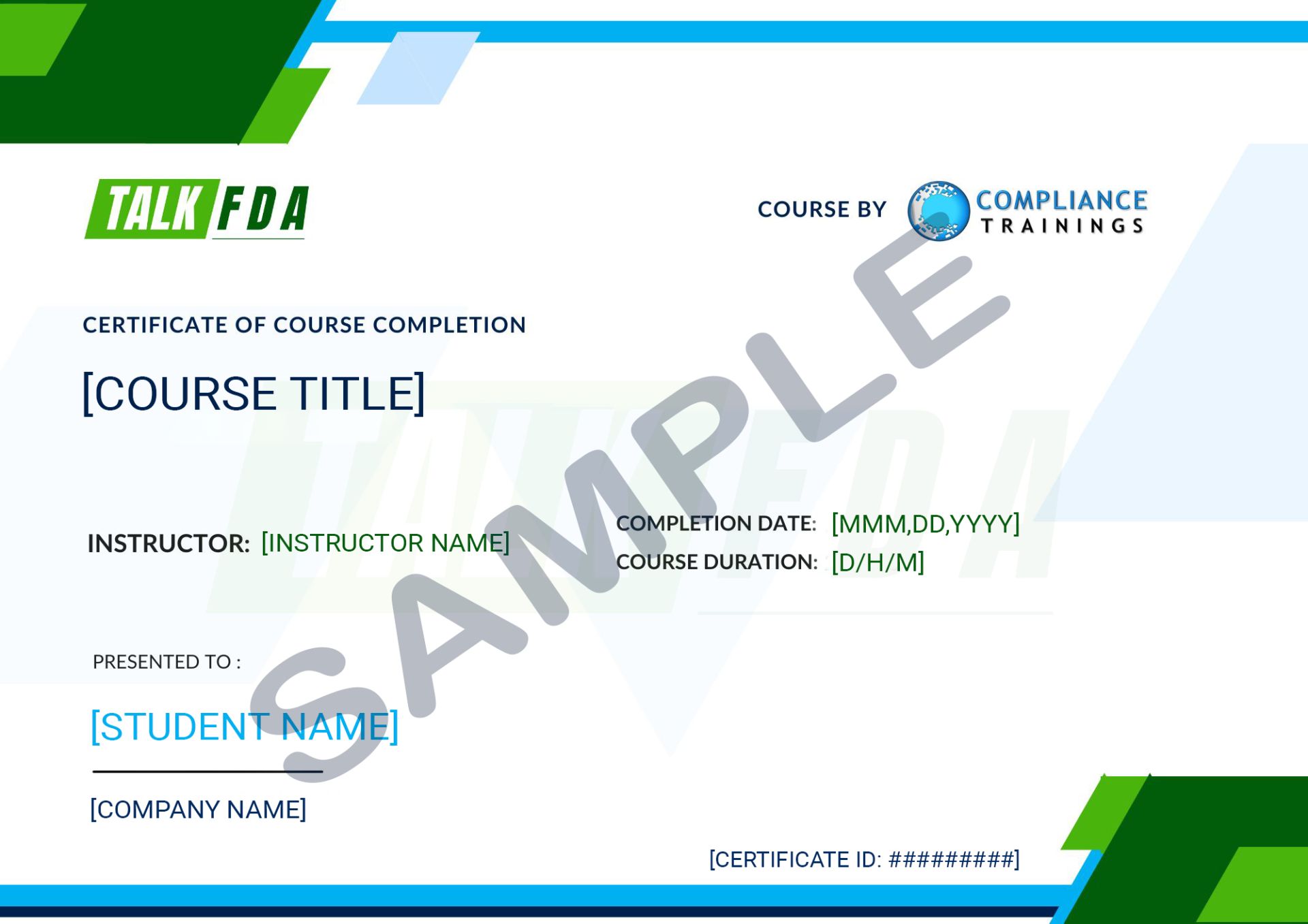
  • Assessment & Certification Included

REGISTRATION OPTIONS

Live session Plus Complimentary 30 Days Streaming access

$190  |  One participant (viewer)

$590  |  Team of up to 10 participants

/* Hide default + / - icon */ .accordion-toggle-icon { opacity: 0; } /* Add circle instead */ .accordion-header::after { content: "○"; font-size: 18px; margin-left: auto; transition: 0.2s ease; } /* When open → filled circle */ .accordion-item.active .accordion-header::after { content: "●"; } /* Hide default + / - icon */ .accordion-toggle-icon { opacity: 0; } /* Add circle instead */ .accordion-header::after { content: "○"; font-size: 18px; margin-left: auto; transition: 0.2s ease; } /* When open → filled circle */ .accordion-item.active .accordion-header::after { content: "●"; } .accordion-header::after { content: "◯"; font-size: 18px; transition: transform 0.25s ease; } .accordion-item.active .accordion-header::after { transform: rotate(90deg); }

REGISTER FOR THE COURSE

US $290 per learner

30-Days Unlimited Streaming Access

/* Hide default + / - icon */ .accordion-toggle-icon { opacity: 0; } /* Add circle instead */ .accordion-header::after { content: "○"; font-size: 18px; margin-left: auto; transition: 0.2s ease; } /* When open → filled circle */ .accordion-item.active .accordion-header::after { content: "●"; } /* Hide default + / - icon */ .accordion-toggle-icon { opacity: 0; } /* Add circle instead */ .accordion-header::after { content: "○"; font-size: 18px; margin-left: auto; transition: 0.2s ease; } /* When open → filled circle */ .accordion-item.active .accordion-header::after { content: "●"; } .accordion-header::after { content: "◯"; font-size: 18px; transition: transform 0.25s ease; } .accordion-item.active .accordion-header::after { transform: rotate(90deg); }

REGISTER FOR THE COURSE

To Get 30-Day Access to ONLY this Course 

US $290 per learner
  • This course is Included in Subscription Pack
Subscription include access to entire Learning Library
/* Hide default + / - icon */ .accordion-toggle-icon { opacity: 0; } /* Add circle instead */ .accordion-header::after { content: "○"; font-size: 18px; margin-left: auto; transition: 0.2s ease; } /* When open → filled circle */ .accordion-item.active .accordion-header::after { content: "●"; } /* Hide default + / - icon */ .accordion-toggle-icon { opacity: 0; } /* Add circle instead */ .accordion-header::after { content: "○"; font-size: 18px; margin-left: auto; transition: 0.2s ease; } /* When open → filled circle */ .accordion-item.active .accordion-header::after { content: "●"; } .accordion-header::after { content: "◯"; font-size: 18px; transition: transform 0.25s ease; } .accordion-item.active .accordion-header::after { transform: rotate(90deg); }
  • Charles H. Paul
  • Study time : 60 Minutes
  • Skill Level: Intermediate
  • Course ID: FDB1602
  • Assessment & Certification Included
  • Ask the Expert

Watch the Course Now  

Watch the Course Now   


Why take this course?

CAPA systems and investigation processes depend on evidence-based analysis, structured reasoning, and conclusions that can withstand regulatory scrutiny. As AI tools are introduced into investigation workflows, organizations are beginning to use them to summarize data, structure reports, and suggest potential causes. While this can improve efficiency, it also creates risk when generated logic begins replacing objective evaluation of evidence and disciplined root cause analysis.

This program focuses on how AI can be integrated into CAPA and investigation activities without weakening process integrity or accountability. The session examines where AI provides value, where its use introduces regulatory exposure, and how unsupported conclusions, prompt bias, or incomplete inputs can distort investigations. Emphasis is placed on maintaining human ownership of analysis, verifying AI-generated content, and ensuring conclusions remain attributable, evidence-based, and aligned with quality system expectations. Participants will also review practical controls for integrating AI into existing investigation and CAPA workflows without disrupting established procedures or approval practices.

  • Separate efficiency from investigative judgment:

    AI can organize data, summarize records, and improve documentation structure, but it cannot replace disciplined evaluation of evidence. This course helps teams distinguish acceptable support uses from higher-risk applications involving root cause determination, causal reasoning, and corrective action decisions. That distinction becomes critical when investigations are reviewed under regulatory scrutiny.

  • Strengthen control over AI-assisted investigations:

    Many organizations use AI informally without defined verification standards or reviewer accountability. This course helps establish practical controls for AI-generated outputs, reviewer responsibilities, and evidence verification while keeping investigations attributable to qualified personnel. The result is stronger alignment between investigation practice, CAPA workflows, and regulatory expectations for complete and defensible conclusions.

Key Areas Covered

  • Role of AI within CAPA and investigation activities
  • Regulatory expectations for evidence-based investigations and conclusions
  • Acceptable versus high-risk AI use cases in regulated workflows
  • Risks associated with AI-generated root cause analysis and causal reasoning
  • Bias, incomplete inputs, and limitations in AI-generated outputs
  • Verification, review, and accountability requirements for AI-assisted investigations
  • Integration of AI into existing CAPA procedures and approval workflows
  • Practical control approaches for maintaining investigation integrity and oversight

Who Must Attend

  • Quality Assurance Departments
  • Regulatory Affairs Departments
  • Manufacturing Departments
  • CAPA Owners
  • Quality Investigators
  • Compliance Specialists
COURSE DIRECTOR

Charles H. Paul

Charles H. Paul has more than 30 years of experience in regulatory consulting, manufacturing, training, and technical documentation. His work designing solutions for complex documentation and training issues directly supports this webinar’s focus on investigation quality, structured analysis, reviewer accountability, and practical controls for AI-assisted CAPA and investigation workflows in regulated environments.

If you would like to request a Proforma invoice to sign up for this course. please click here

Commonly Asked Questions About This Subject

The following questions address practical regulatory, compliance, validation, quality, operational, and inspection-related considerations commonly associated with this subject.

How can an investigator demonstrate that a root cause came from evidence rather than AI-generated reasoning?

The answer becomes visible in the investigation record. If the root cause cannot be traced directly back to observed facts, supporting data, interviews, records, testing results, or documented analysis, the conclusion becomes difficult to defend regardless of how logical it sounds.


A recurring problem with AI-assisted investigations is that the output often reads like an experienced investigator wrote it. The narrative is coherent, the logic appears structured, and the wording is persuasive. During review, however, the supporting evidence may be weak or incomplete. That gap creates inspection friction because the conclusion appears stronger than the underlying facts.

Reviewers frequently ask a simple question: "What evidence led you to this conclusion?" If the answer requires referencing AI-generated reasoning rather than documented investigation evidence, confidence in the entire investigation can deteriorate quickly.

Strong investigations maintain a visible chain between observation, evidence, analysis, conclusion, and CAPA decision. AI may help organize information, but the record should clearly show how qualified personnel evaluated the evidence and arrived at the final determination.

What AI-generated investigation content creates the greatest regulatory risk?

Root cause statements and corrective action recommendations usually create the highest risk because they directly influence quality decisions. An AI-generated summary can often be corrected during review. An unsupported root cause can drive months of ineffective CAPA activity.


The concern is not that AI generates random answers. The concern is that it generates plausible answers. A root cause may sound reasonable, align with historical issues, and fit the available narrative while still being unsupported by actual evidence from the event under investigation.


This becomes especially problematic when dealing with recurring deviations, laboratory investigations, complaint investigations, or complex manufacturing events involving multiple contributing factors. AI tends to compress complexity into a single explanation. Investigations frequently require the opposite approach.


Inspection discussions often become uncomfortable when CAPAs were implemented, resources were spent, and repeat events still occurred. In those situations, reviewers frequently work backward through the investigation and discover that the original root cause was accepted because it sounded convincing rather than because it was demonstrated through evidence.

What governance controls should exist before AI is used in CAPA or investigation workflows?

The first control should define which investigation activities AI is allowed to support and which activities remain exclusively human decisions. Without that boundary, responsibility becomes blurred very quickly.


Problems tend to appear when teams begin using AI informally. One investigator uses it to summarize data. Another uses it to draft conclusions. A third uses it to suggest corrective actions. Before long, AI influences critical decisions without any defined review standard.


Governance should focus on accountability rather than technology. Every AI-assisted output should have an identifiable reviewer responsible for confirming accuracy, completeness, and evidentiary support. The review process should be documented and applied consistently.


During audits and inspections, questions often focus less on the AI tool itself and more on who accepted the output and why. A sophisticated AI platform provides little protection if there is no documented expectation for verification.


Well-controlled programs treat AI-generated content similarly to any other external input. The output may contribute to the investigation, but ownership of the conclusion remains with qualified personnel.

Can AI use create problems even when the final investigation conclusion is correct?

Yes. A correct conclusion can still become difficult to defend if the path used to reach it is poorly documented or inadequately controlled.


Consider an investigation where AI helps draft the analysis, identify possible causes, and structure the report. The final root cause happens to be correct and is supported by evidence. During inspection, reviewers may still question how alternative causes were evaluated, how AI suggestions were verified, and how investigators prevented bias from influencing the analysis.


The concern shifts from outcome to process. Quality systems are built on demonstrating how decisions were made, not simply whether the final answer appears reasonable. If AI significantly influenced the investigation but its role is invisible, undocumented, or poorly understood, reviewers may question the reliability of the process itself.


Experienced investigators recognize that defensibility depends on transparency. The record should make it clear where AI assisted, what was independently verified, what evidence was reviewed, and how the final conclusion was reached. Clear documentation of that decision path usually carries more weight than assurances that the AI output was reviewed before approval.

Ready to Strengthen Your Team? Let’s Build Your Training Plan.

Whether you’re looking for a single onsite workshop or a multi-team training series, we’ll help you design a program that fits your goals, timelines, and operational reality.

Your team deserves the clarity.
Your organization deserves the confidence.

Upcoming Courses

Your TalkFDA Webinar Experience

When you reserve your seat, everything is organized for you — from access to certification from one place.

1. Confirmation

You receive a confirmation email and your course appears instantly in your TalkFDA dashboard.

2. Your Course Hub
Your TalkFDA course page becomes your central hub where you can join the session, access materials, and manage your learning.

3. Join the Live Training
At the scheduled time, click Join Session and you’ll be connected to the live Webex session with the instructor.

4. Watch Again Anytime
After the session, the playback becomes available on the same course page so you can revisit important sections.
5. Earn Your Certificate
Complete the course and your certificate is unlocked automatically in your learning history.

Everything related to your webinar: access, materials, playback, and certification — lives in one place.
Simple. Organized. Professional.
Go ahead and reserve your seat with confidence.

Testimonials

This is an upcoming session. Feedback below reflects experiences from similar programs delivered by our expert faculty.

“Session was easy to follow even for non-core team members. That helped.”
- Production Officer
“Good balance. Not too basic, not too deep. Worked well for mixed team.”
- Manager, Regulatory Affairs
“Team found it useful. Especially for aligning understanding across functions.”
- Director, Operations

Featured Courses