Featured Medical Device Regulatory Training Courses
Build practical knowledge of medical device regulations and quality requirements with TalkFDA courses covering FDA medical device regulations, EU MDR, design controls, risk management, quality systems, regulatory submissions and post-market requirements.
Medical Device Regulatory Training
Medical device professionals need to understand how regulatory requirements affect product development, quality systems, submissions and ongoing compliance.
TalkFDA's Medical Device Regulatory Training covers practical topics across FDA medical device regulations, EU MDR, design controls, risk management, quality systems, regulatory submissions and post-market requirements.
Explore courses designed to help professionals understand medical device regulatory expectations and apply them effectively within their roles.
-
FDA Medical Device Regulations
-
EU MDR & European Medical Devices
-
Design Controls & Product Development
-
Risk Management for Medical Devices
-
Medical Device Quality Systems
-
Regulatory Submissions & Post-Market Compliance
Featured Medical Device Regulatory Training Courses
Who should take Medical Device Regulatory Training?
Medical device organizations rely on professionals who understand how regulatory and quality requirements apply throughout the product lifecycle. These courses can support professionals across product development, quality, regulatory affairs, manufacturing and compliance functions.
-
Medical Device Regulatory Affairs professionals
-
Quality Assurance and Quality Systems professionals
-
Design and Product Development professionals
-
Risk Management professionals
-
Validation and Verification professionals
-
Manufacturing and Operations professionals
-
Auditors and regulatory consultants
-
Managers and team leaders responsible for medical device compliance
What you get
TalkFDA courses are designed to give you practical, expert-led learning that you can apply to your work. Most recorded courses include the webinar recording, presentation PDF and an assessment. Selected programs may also include additional handouts, templates, tools or other learning resources.
How to use this hub
Use the training areas and course catalogue to explore programs that match your current requirements. Select a course to review its topic coverage, intended audience, faculty, duration and available learning options before deciding whether it is the right fit for you.
Find the right course fast
Explore TalkFDA's medical device regulatory training catalogue and choose a course that matches your current learning, regulatory or quality needs. Each course page provides the details you need to decide whether the program is right for you
What Medical Device Regulatory Training Can Cover
Medical device regulatory requirements extend across product development, quality systems, risk management, regulatory submissions and post-market activities. TalkFDA courses cover practical topics that help professionals understand regulatory expectations and apply them throughout the medical device lifecycle.
FDA Medical Device Regulations
Understand key FDA requirements affecting medical device development, quality and regulatory compliance.
EU MDR & European Medical Devices
Build practical knowledge of EU MDR requirements and the European medical device regulatory framework.
Design Controls
Understand design control principles and their application throughout medical device product development.
Risk Management
Explore risk management concepts and their role in medical device safety, quality and regulatory compliance
Medical Device Quality Systems
Understand quality system requirements that support compliant medical device development and manufacturing.
Regulatory Submissions & Post-Market Compliance
Build knowledge of regulatory submissions, post-market responsibilities and ongoing medical device compliance.
FAQ
What medical device regulations should professionals understand?
What does medical device regulatory training cover?
How do FDA medical device requirements differ from EU MDR requirements?
- Classification: FDA uses Class I, II and III. EU MDR uses Class I, IIa, IIb and III under the rules in Annex VIII.
- Market pathway: FDA uses 510(k), De Novo or PMA. EU MDR uses conformity assessment and a CE certificate, with Notified Body involvement for most classes.
- Clinical evidence: EU MDR requires a clinical evaluation for all devices. Many US 510(k)s rely on substantial equivalence, sometimes without new clinical data.
- Roles: EU MDR defines the authorized representative, importer, distributor and person responsible for regulatory compliance (PRRC). Foreign manufacturers in the US need a US agent.
- Post-market: FDA uses Part 803 reporting. EU MDR uses a PMS plan, PSURs, PMCF and vigilance reporting.
What is the difference between FDA 21 CFR Part 820 and ISO 13485?
What should I learn about medical device design controls?
What regulatory training should a medical device Regulatory Affairs professional take?
What medical device compliance training is useful for Quality Assurance professionals?
What should design engineers know about medical device design controls?
What training helps medical device professionals understand risk management?
What regulatory knowledge do medical device manufacturers need?
What training helps prepare a medical device company for an FDA inspection?
How can medical device companies improve regulatory compliance?
- Training staff by role and keeping training records current.
- Running periodic gap assessments and internal audits.
- Strengthening CAPA, complaint handling and trend analysis.
- Keeping design controls and risk files linked and up to date.
- Monitoring regulatory changes (such as QMSR and EU MDR transition timelines).
- Holding management reviews that use real quality data.
- Running mock inspections.
What should I know about FDA Quality Management System Regulation (QMSR)?
- Terminology now follows ISO 13485 (for example, the medical device file replaces separate DHF, DMR and DHR records).
- Risk management is emphasized throughout the quality system.
- FDA-specific requirements remain in areas such as labeling and UDI.
- Inspections may now look at records such as management review and audit reports.
What are the key EU MDR requirements for medical device manufacturers?
What training is useful for medical device post-market surveillance and vigilance?
What is included with a TalkFDA recorded course?
How do I choose the right medical device regulatory training course?
Are TalkFDA courses live or recorded?
Can I take a recorded course after the live program has ended?
Get FDA training updates
Thanks. Please check your inbox to confirm your subscription.

TalkFDA Affiliate Program — Terms & Conditions
1. Joining the Program
- By registering, you agree to these terms.
- Approval of applications is at TalkFDA’s sole discretion.
2. Affiliate Commissions
- Commission Rate: 20% of net sales (after refunds/discounts).
- Commission applies to initial purchase and recurring renewals.
- Payments are made monthly via [payment method] after a 30-day refund period.
3. Tracking & Attribution
- Tracking is done via unique Affiliate IDs.
- Last-click attribution is used (the most recent affiliate link gets credit).
- TalkFDA is not responsible for untracked sales caused by ad blockers, browser issues, or customer error.
4. Prohibited Practices
Affiliates must not:
- Use spam, fake accounts, bots, or misleading claims.
- Misrepresent TalkFDA’s services or guarantees.
- Bid on TalkFDA’s name, brand, or trademarks in paid search ads without prior permission.
- Self-refer (you can’t earn commission from your own purchases).
5. Promotion Guidelines
- Affiliates may promote via websites, blogs, social media, email lists (opt-in only).
- Promotion must be professional and respectful to TalkFDA’s reputation.
- Certain content (adult, hate speech, political, illegal) is strictly prohibited.
6. Termination
- TalkFDA reserves the right to suspend or terminate an affiliate account for any breach of these terms, or if the affiliate’s activity harms TalkFDA’s reputation.
- Any unpaid commissions may be forfeited if termination is due to violation of terms.
7. Liability
- Affiliates act as independent promoters and are not employees of TalkFDA.
- TalkFDA is not liable for indirect, special, or consequential damages related to the program.
8. Changes to the Program
- TalkFDA may update commission rates, terms, or program rules at any time.
- Affiliates will be notified of changes by email or via the Affiliate Dashboard.
9. Governing Law
- These terms are governed by the laws of Canada.
Credit Card required to activate Trial.
You won’t be charged unless you choose to continue after the trial period.
Welcome to TalkFDA Learning
Thank you for your purchase!
Some emails from TalkFDA may be filtered by company email systems.
- Please check the Inbox inside My Space (top right corner).
- Add @talkfda.com to your safe sender list.
Access & Support Information
-
Please check your Spam / Junk folder if you don’t receive emails shortly after purchase.
-
In some organizations, emails may be quarantined by IT security systems — you may need to contact your IT team.
-
We recommend adding @talkfda.com to your Safe Senders / Allow List.
Your TalkFDA Webinar Experience
1. Confirmation
3. Join the Live Training
4. Watch Again Anytime
Everything related to your webinar: access, materials, playback, and certification — lives in one place.
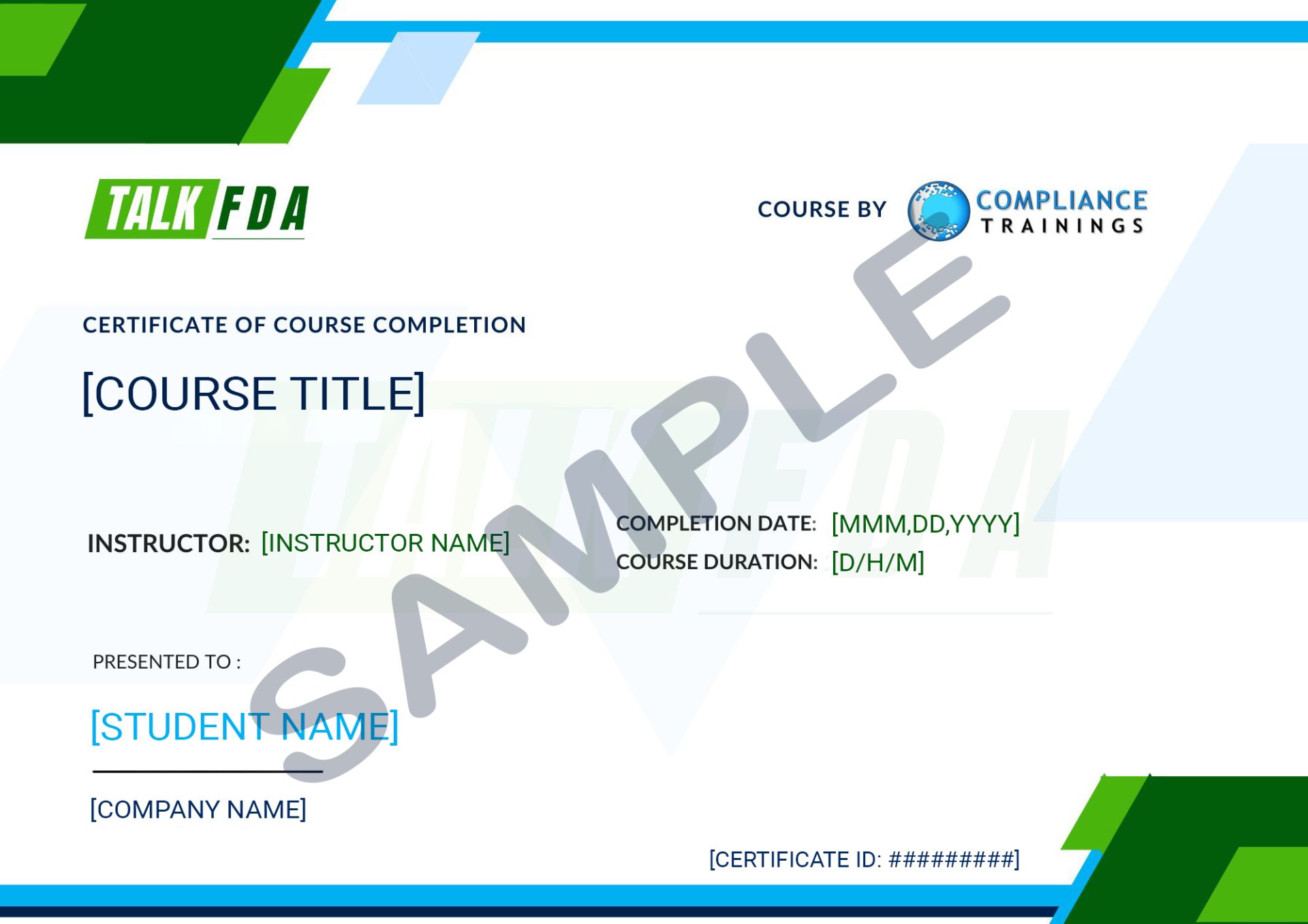
This course will be available to watch as soon as registration is completed.