LIVE WEBINAR
.addeventatc { background-color:#49b40c!important; color:#ffffff!important; font-size:13px!important; padding:6px 20px 6px 12px!important; /* extra right padding for icon */ border-radius:6px!important; display:inline-flex!important; align-items:center!important; gap:6px!important; /* spacing between text and icon */ position:relative!important; } /* Icon fix */ .addeventatc .addeventatc_icon { position:absolute!important; right:10px!important; /* push icon to right edge */ width:12px!important; height:12px!important; background:url(https://cdn.addevent.com/libs/imgs/icon-calendar-fff-t1.svg) no-repeat center center!important; background-size:14px!important; }
Share:

QMSR Device Records: Structuring DDF, MDF and Related Relationships for Inspection Readiness

  • Date
    14 July 2026
  • 11.00 AM Eastern Time (US/Canada)
    03.00 PM GMT

Course is now LIVE. Click below to join the session.

This course helps organizations move from managing individual records to managing the relationships between them, improving traceability, change impact visibility, and confidence that product, risk, manufacturing, and quality information remain synchronized throughout the lifecycle. This course is designed for organizations responsible for creating, maintaining, reviewing, or relying on interconnected product, quality, risk, and manufacturing records.

/* Hide default + / - icon */ .accordion-toggle-icon { opacity: 0; } /* Add circle instead */ .accordion-header::after { content: "○"; font-size: 18px; margin-left: auto; transition: 0.2s ease; } /* When open → filled circle */ .accordion-item.active .accordion-header::after { content: "●"; } /* Hide default + / - icon */ .accordion-toggle-icon { opacity: 0; } /* Add circle instead */ .accordion-header::after { content: "○"; font-size: 18px; margin-left: auto; transition: 0.2s ease; } /* When open → filled circle */ .accordion-item.active .accordion-header::after { content: "●"; } .accordion-header::after { content: "◯"; font-size: 18px; transition: transform 0.25s ease; } .accordion-item.active .accordion-header::after { transform: rotate(90deg); }
REGISTRATION OPTIONS

Live session Plus
Complimentary 30 Days Streaming access

$290  |  One participant (viewer)

$390  |  Team (2 - 5 participants)

$490 |  Team (6 - 10 participants)

REGISTER FOR THE COURSE

US $290 per learner

30-Days Unlimited Streaming Access

/* Hide default + / - icon */ .accordion-toggle-icon { opacity: 0; } /* Add circle instead */ .accordion-header::after { content: "○"; font-size: 18px; margin-left: auto; transition: 0.2s ease; } /* When open → filled circle */ .accordion-item.active .accordion-header::after { content: "●"; } /* Hide default + / - icon */ .accordion-toggle-icon { opacity: 0; } /* Add circle instead */ .accordion-header::after { content: "○"; font-size: 18px; margin-left: auto; transition: 0.2s ease; } /* When open → filled circle */ .accordion-item.active .accordion-header::after { content: "●"; } .accordion-header::after { content: "◯"; font-size: 18px; transition: transform 0.25s ease; } .accordion-item.active .accordion-header::after { transform: rotate(90deg); }

REGISTER FOR THE COURSE

To Get 30-Day Access to ONLY this Course 

US $290 per learner
  • This course is Included in Subscription Pack
Subscription include access to entire Learning Library
/* Hide default + / - icon */ .accordion-toggle-icon { opacity: 0; } /* Add circle instead */ .accordion-header::after { content: "○"; font-size: 18px; margin-left: auto; transition: 0.2s ease; } /* When open → filled circle */ .accordion-item.active .accordion-header::after { content: "●"; } /* Hide default + / - icon */ .accordion-toggle-icon { opacity: 0; } /* Add circle instead */ .accordion-header::after { content: "○"; font-size: 18px; margin-left: auto; transition: 0.2s ease; } /* When open → filled circle */ .accordion-item.active .accordion-header::after { content: "●"; } .accordion-header::after { content: "◯"; font-size: 18px; transition: transform 0.25s ease; } .accordion-item.active .accordion-header::after { transform: rotate(90deg); }
  • Faculty
    José Mora
  • Duration
    90 Minutes
  • Course ID
    TF1382
  • Live Q&A +
    Post-live Continued Learning
  • Presentation Handout
    & Templates
  • Assessment
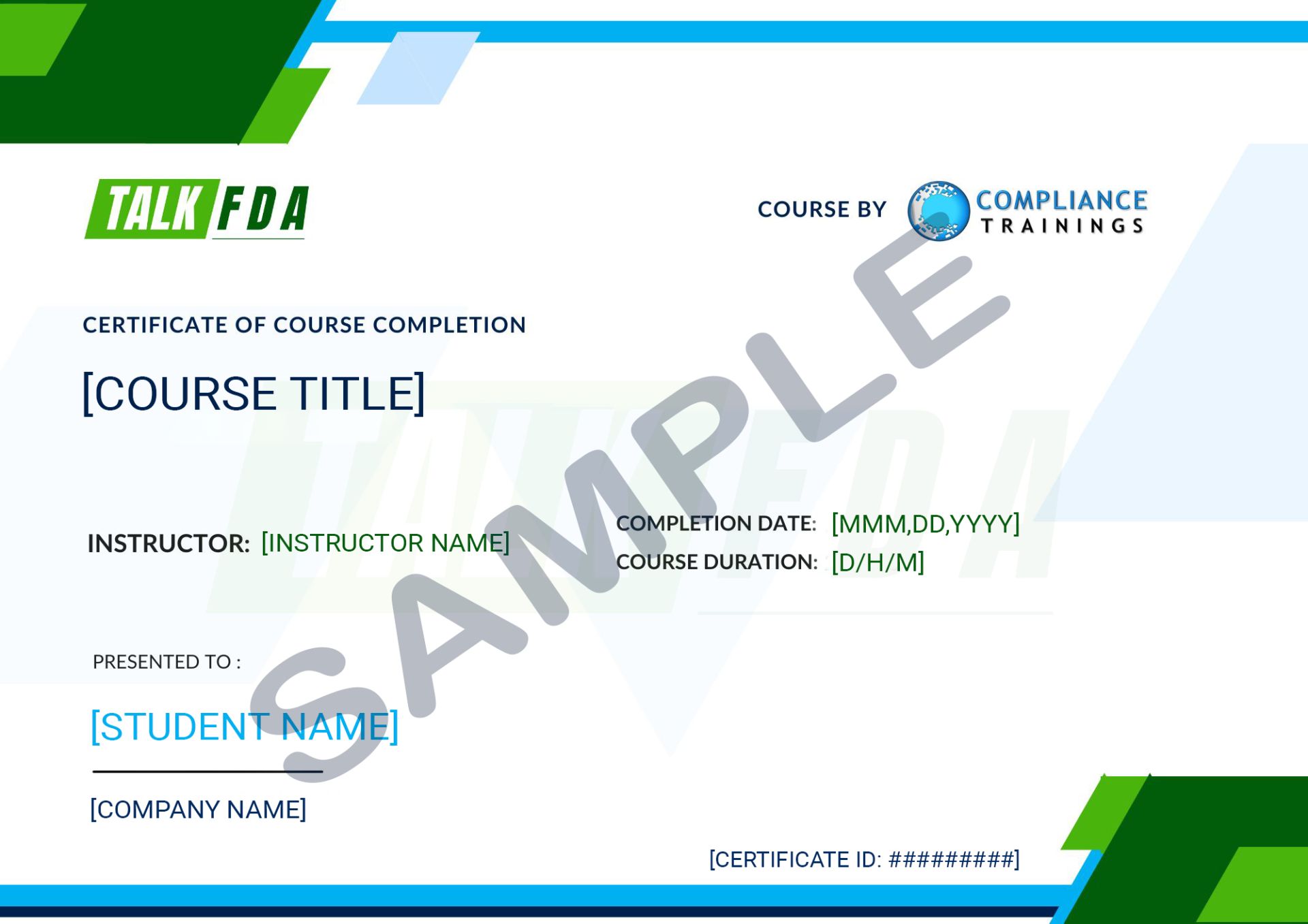
    & Certification Included


Why take this course?

Medical device organizations often maintain extensive collections of controlled records across design, risk management, manufacturing, validation, quality, and post-market activities. While these records may be individually complete, inspection challenges frequently emerge when organizations cannot clearly demonstrate how information flows between them. As products evolve through design changes, supplier transitions, remediation activities, and regulatory updates, relationships among records can become fragmented, creating inconsistencies that are difficult to identify and maintain.


This webinar examines device records through a relationship-based perspective rather than a document-centered one. Participants will evaluate how Design Development Files (DDF), Medical Device Files (MDF), risk management records, validation evidence, manufacturing information, and related quality system records interact throughout the product lifecycle. Particular attention is given to traceability, configuration management, change impact analysis, and relationship integrity. The session introduces Lean Documents and Lean Configuration principles as practical methods for improving visibility across interconnected records, maintaining consistency as products change, and strengthening an organization’s ability to explain and support device record structures during inspections.

Strengthen Traceability Across Critical Device Records

Participants will learn how requirements, risks, controls, verification evidence, validation evidence, and released product configurations connect within a quality system. This perspective helps teams answer inspection questions more effectively and reduces reliance on fragmented information, disconnected records, and institutional knowledge when demonstrating product lifecycle consistency.

Manage Change Through Relationship Awareness

As products evolve, seemingly minor modifications can affect multiple records across design, manufacturing, and quality functions. Participants will gain practical approaches for identifying relationship impacts, assessing record dependencies, and maintaining consistency across interconnected information structures before traceability gaps become inspection or operational concerns.

Key Areas Covered

  • Lean Documents and Lean Configuration principles for device record management
  • Structure and purpose of Design Development Files, Medical Device Files, and related records
  • Relationship mapping across requirements, risks, controls, and supporting evidence
  • Traceability management throughout the product lifecycle
  • Configuration management compared with traditional document management approaches
  • Design changes, relationship dependencies, and change impact analysis
  • Maintaining consistency across quality, manufacturing, validation, and design records
  • Inspection readiness through relationship integrity and improved information visibility

Who Must Attend

  • Research and Development Departments
  • Quality Assurance Departments
  • Design Assurance Teams
  • Regulatory Affairs Departments
  • Manufacturing Departments
  • Engineering Departments
  • Operations Departments
  • Supplier Quality Departments
  • Document Control Teams
  • Quality Systems Teams
COURSE DIRECTOR

José Mora

José Ignacio Mora brings more than three decades of experience in manufacturing engineering, design controls, quality systems, process validation, supplier management, and regulatory compliance within the medical device industry. As creator of the Lean Documents and Lean Configuration methodology, his work focuses on traceability, configuration management, relationship integrity, and inspection readiness across complex device record systems.

If you would like to request a Proforma invoice to sign up for this course. please click here

Commonly Asked Questions About This Subject

The following questions address practical regulatory, compliance, validation, quality, operational, and inspection-related considerations commonly associated with this subject.

What is the most difficult release decision when critical test results are still pending but the patient treatment window is rapidly closing?

A release decision made under time pressure becomes difficult to defend when urgency replaces documented scientific justification. Patient scheduling concerns, clinical commitments, and product viability constraints can create significant pressure to move material forward before the full quality picture is available.


Inspectors typically focus less on the decision itself and more on how the decision was reached. Records often reveal informal discussions, undocumented assumptions, or verbal agreements that influenced disposition decisions. Those gaps become highly visible during review.


Evidence that carries weight includes predefined decision criteria, documented risk assessments, historical process knowledge, product-specific justification, management involvement, and clearly established conditions governing release. Reviewers want to see that the decision framework existed before the event occurred rather than being developed afterward to support a desired outcome.


The strongest release records demonstrate that patient considerations and product quality considerations were evaluated together through a controlled process rather than treated as competing priorities.

How do chain-of-identity failures typically occur even when labeling controls appear adequate?

An operational failure point often emerges during process transitions rather than during manufacturing activities themselves. Labels may be accurate, records may be complete, and electronic systems may function properly, yet identity errors still occur during handoffs between teams, facilities, laboratories, couriers, and clinical sites.


Investigations frequently reveal that personnel relied on assumptions regarding patient identifiers, scheduling information, shipping notifications, or manually transcribed data. The failure often originates in workflow design rather than labeling execution.


Inspection concerns increase when identity verification occurs only at isolated checkpoints instead of being embedded throughout the process. A well-controlled label attached to the wrong material still creates a serious failure.


Strong systems typically contain multiple independent verification opportunities across operational steps. Reviewers often place greater value on process design that prevents identity confusion than on procedures that merely detect it after the error has already occurred.

What makes a traceability system difficult to defend during an inspection even when complete records exist?

Documentation concerns arise when traceability depends heavily on reconstruction rather than immediate visibility. Investigators may eventually connect every activity, transfer, test result, shipment, and disposition record, yet require extensive effort to do so.


Inspectors often test traceability in reverse. They may begin with a patient administration event and request rapid demonstration of the associated manufacturing history, testing activities, material movements, deviations, and approvals. Delays during this exercise frequently expose underlying weaknesses.


Inspection friction increases when information resides across disconnected databases, spreadsheets, emails, paper records, and third-party systems that require manual reconciliation. Complete records alone do not demonstrate operational control.


Evidence of control is stronger when authorized personnel can efficiently establish material history, patient linkage, product status, and decision history without extensive investigation. Traceability that depends on institutional knowledge or specific individuals becomes increasingly difficult to defend as operations expand.

At what point does growth from clinical production to commercial operations begin creating new chain-of-identity risks?

A governance concern appears when existing controls continue functioning technically but no longer scale operationally. Processes that worked effectively for a limited number of patient treatments can become vulnerable when production volume, staffing levels, manufacturing locations, and external partners increase.


Reviewers often encounter systems originally designed around direct communication and experienced personnel. As activity grows, those informal controls gradually weaken. Personnel turnover, parallel manufacturing campaigns, multiple collection sites, expanded logistics networks, and increasing documentation volumes introduce complexity that was previously absent.


Inspection observations frequently involve organizations that expanded capacity while maintaining procedures, review structures, approval workflows, or oversight mechanisms intended for much smaller operations.


Evidence that supports scalability includes stress testing of processes, periodic reassessment of control effectiveness, management review of operational trends, simulation exercises, and documented evaluation of new failure modes introduced by growth. Successful expansion generally reflects deliberate redesign rather than simple replication of existing practices.

Your TalkFDA Webinar Experience

When you reserve your seat, everything is organized for you — from access to certification from one place.

1. Confirmation

You receive a confirmation email and your course appears instantly in your TalkFDA dashboard.

2. Your Course Hub
Your TalkFDA course page becomes your central hub where you can join the session, access materials, and manage your learning.

3. Join the Live Training
At the scheduled time, click Join Session and you’ll be connected to the live Webex session with the instructor.

4. Watch Again Anytime
After the session, the playback becomes available on the same course page so you can revisit important sections.
5. Earn Your Certificate
Complete the course and your certificate is unlocked automatically in your learning history.

Everything related to your webinar: access, materials, playback, and certification — lives in one place.
Simple. Organized. Professional.
Go ahead and reserve your seat with confidence.

Built on 20+ years of global regulatory training experience across FDA, EMA, MHRA, and ICH frameworks.
Trusted by professionals across 80+ countries.

Testimonials

This is an upcoming session. Feedback below reflects experiences from similar programs delivered by our expert faculty.

“Session was easy to follow even for non-core team members. That helped.”
- Production Officer
“Good balance. Not too basic, not too deep. Worked well for mixed team.”
- Manager, Regulatory Affairs
“Team found it useful. Especially for aligning understanding across functions.”
- Director, Operations

Ready to Strengthen Your Team? Let’s Build Your Training Plan.

Whether you’re looking for a single onsite workshop or a multi-team training series, we’ll help you design a program that fits your goals, timelines, and operational reality.

Your team deserves the clarity.
Your organization deserves the confidence.

Upcoming Courses

Featured Courses