Live Webinar

Leveraging AI in Risk Assessment for Smarter Computer Systems Validation

This course equips validation teams to use AI as structured decision support for risk assessment, replacing subjective scores with evidence-driven rationale that stands up to inspection discussion. Participants leave with a practical approach to build and maintain risk models that guide validation focus, strengthen data integrity reasoning, and connect risk outputs to CSA-aligned SDLC and GAMP 5 (Second Edition) decisions.

   05 March 2026    |       11.00 AM Eastern Time (US/Canada)    |       04.00 PM GMT    |       90 Minutes    |       FDB1347

   The session is now Live. Click below to join.
   Share with a Colleague
  Ask Question for Webinar
  Mail to Support
.addeventatc { background-color:#49b40c!important; color:#ffffff!important; font-size:13px!important; padding:6px 20px 6px 12px!important; /* extra right padding for icon */ border-radius:6px!important; display:inline-flex!important; align-items:center!important; gap:6px!important; /* spacing between text and icon */ position:relative!important; } /* Icon fix */ .addeventatc .addeventatc_icon { position:absolute!important; right:10px!important; /* push icon to right edge */ width:12px!important; height:12px!important; background:url(https://cdn.addevent.com/libs/imgs/icon-calendar-fff-t1.svg) no-repeat center center!important; background-size:14px!important; }
Share on:

Webinar - Instant Streaming Access

Leveraging AI in Risk Assessment for Smarter Computer Systems Validation

This course equips validation teams to use AI as structured decision support for risk assessment, replacing subjective scores with evidence-driven rationale that stands up to inspection discussion. Participants leave with a practical approach to build and maintain risk models that guide validation focus, strengthen data integrity reasoning, and connect risk outputs to CSA-aligned SDLC and GAMP 5 (Second Edition) decisions.
    John E. Lincoln    |         90 Minutes    |       FDB1347
 

Registration to this course includes:

  • Presentation Handout & Templates
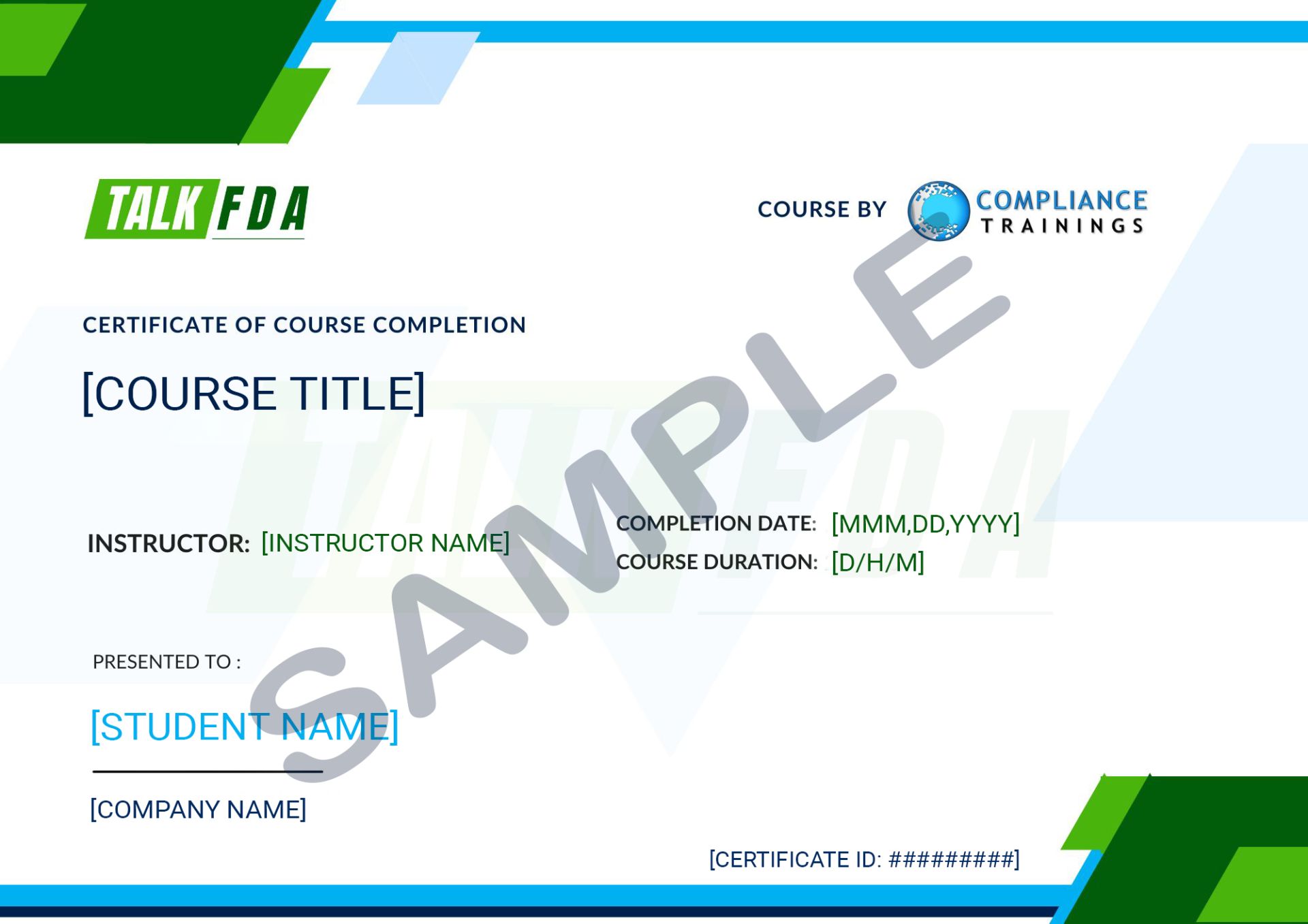
  • Certificate of Completion
  • Trial access to TalkFDA Subscription
  • TalkFDA Members-only Community

LIVE - SINGLE

US $290
ONE participant (viewer) – Live session
PLUS Complimentary Streaming access for 2 month

CORPORATE - LIVE

US $990
Up to 10 participants – Live session
PLUS Complimentary Streaming access for 2 months for each attendee

TalkFDA Membership Benefits

Be a part of the exclusive community
Explore how membership complements your learning

Registration to this course includes:

  • Presentation Handout & Templates
  • Certificate of Completion
  • Trial access to TalkFDA Subscription
  • TalkFDA Members-only Community

SINGLE ACCESS

US $290
ONE participant (viewer) – Streaming access for 2 month

CORPORATE ACCESS

US $990
Up to 10 participants – Streaming access for 2 months for each attendee

TalkFDA Membership Benefits

Be a part of the exclusive community
Explore how membership complements your learning

Why take this course?

Risk assessment sits at the center of computer systems validation, yet many programs still depend on subjective scoring, legacy templates, and assumptions that do not reflect how modern GxP systems behave. As platforms, integrations, and operating data grow more complex, static scoring struggles to explain why controls exist, how likelihood and criticality were judged, and what evidence supported the decision—gaps that become visible quickly during FDA inspections. Teams also misapply CSA by moving faster without strengthening the underlying risk logic.


This program frames AI as a decision-support input for validation risk assessment, used responsibly to replace static scoring with evidence-based reasoning. It clarifies how teams can strengthen risk logic during a CSV-to-CSA transition, so faster execution does not come at the cost of weaker rationale. The work centers on building objective, repeatable risk models that can be maintained, audited internally, and explained consistently, strengthening regulator confidence in how risk decisions are made.


Key technical elements include using machine-learning signals to inform failure likelihood and criticality, integrating AI outputs into SDLC decisions, and aligning the approach with GAMP 5 (Second Edition). It also addresses how AI-assisted risk assessments intersect with electronic records expectations under 21 CFR Part 11, how to use operational system data for continuous risk monitoring, and how to explain AI-supported risk decisions clearly when inspection questions focus on evidence, controls, and data evaluation.

  • Replace subjective scoring with explainable risk reasoning:

    Many CSV risk assessments rely on numbers that look precise but cannot justify why a control is required or what evidence informed likelihood and criticality. This course trains teams to shift to AI-supported judgment that is anchored in available system evidence and documented logic. The outcome is clearer justification for controls, clearer links to data evaluation, and fewer weak points when an inspector asks how the risk conclusion was reached and why it remains current.


  • Connect AI outputs to CSA decisions across the SDLC:

    CSA is often treated as a shortcut, which creates risk models that move quickly but do not hold together during review. This course provides a method to connect AI outputs to the decisions teams actually make across the SDLC, including how validation focus is set and how GAMP 5 (Second Edition) decisions are supported. You gain a more consistent way to document how risk logic was formed, how it is maintained, and how it is communicated across QA, IT, and system owners.

  • Maintain risk logic through Part 11 considerations and continuous monitoring:

    AI-assisted risk assessment affects how teams think about electronic records, evidence, and ongoing oversight. This course addresses data integrity reasoning and 21 CFR Part 11 considerations that arise when AI inputs influence validation decisions. It also establishes how to use operational system data for continuous risk monitoring, so the model does not freeze at go-live. The result is stronger readiness for inspection conversations where regulators ask for the basis of risk decisions and how changes are detected and handled.

Key Areas Covered

Risk definition for GxP systems and why traditional scoring breaks down
CSV to CSA transition supported by AI-based risk logic as decision support
Machine-learning signals used to inform failure likelihood and criticality
Building objective risk assessment models with documentation that can be maintained
Integrating AI outputs into SDLC decision points that drive validation focus
Applying GAMP 5 (Second Edition) to AI-informed validation risk decisions
Data integrity reasoning and 21 CFR Part 11 considerations for AI-assisted risk assessment
Continuous risk monitoring using operational system data and explaining AI-based decisions during FDA inspections
If you would like to request a Proforma invoice to sign up for this course. please click here

Upcoming Courses

Featured Courses