LIVE WEBINAR
.addeventatc { background-color:#49b40c!important; color:#ffffff!important; font-size:13px!important; padding:6px 20px 6px 12px!important; /* extra right padding for icon */ border-radius:6px!important; display:inline-flex!important; align-items:center!important; gap:6px!important; /* spacing between text and icon */ position:relative!important; } /* Icon fix */ .addeventatc .addeventatc_icon { position:absolute!important; right:10px!important; /* push icon to right edge */ width:12px!important; height:12px!important; background:url(https://cdn.addevent.com/libs/imgs/icon-calendar-fff-t1.svg) no-repeat center center!important; background-size:14px!important; }
Share:

IQ, OQ & PQ: What Now Counts as Sufficient Validation Evidence

Course is now LIVE. Click below to join the session.

** Registration to this course includes Trial access to TalkFDA Subscription and Members-only Community. Contact our Support for more details after the course completion.

This course helps validation professionals distinguish evidence that genuinely supports qualification and process performance from documentation that adds activity without strengthening decision quality. The result is greater confidence when defining testing scope, acceptance criteria, deviation handling, and validation conclusions.

  • 25 June 2026
  • Eastern Time (US/Canada): 11.00 AM
  • GMT: 3.00 PM
  • 90 Minutes
  • TF1419
  • Meredith Crabtree
  • Live Session + Post-live Continued Learning
  • Live Q&A Included
  • Presentation Handout & Templates
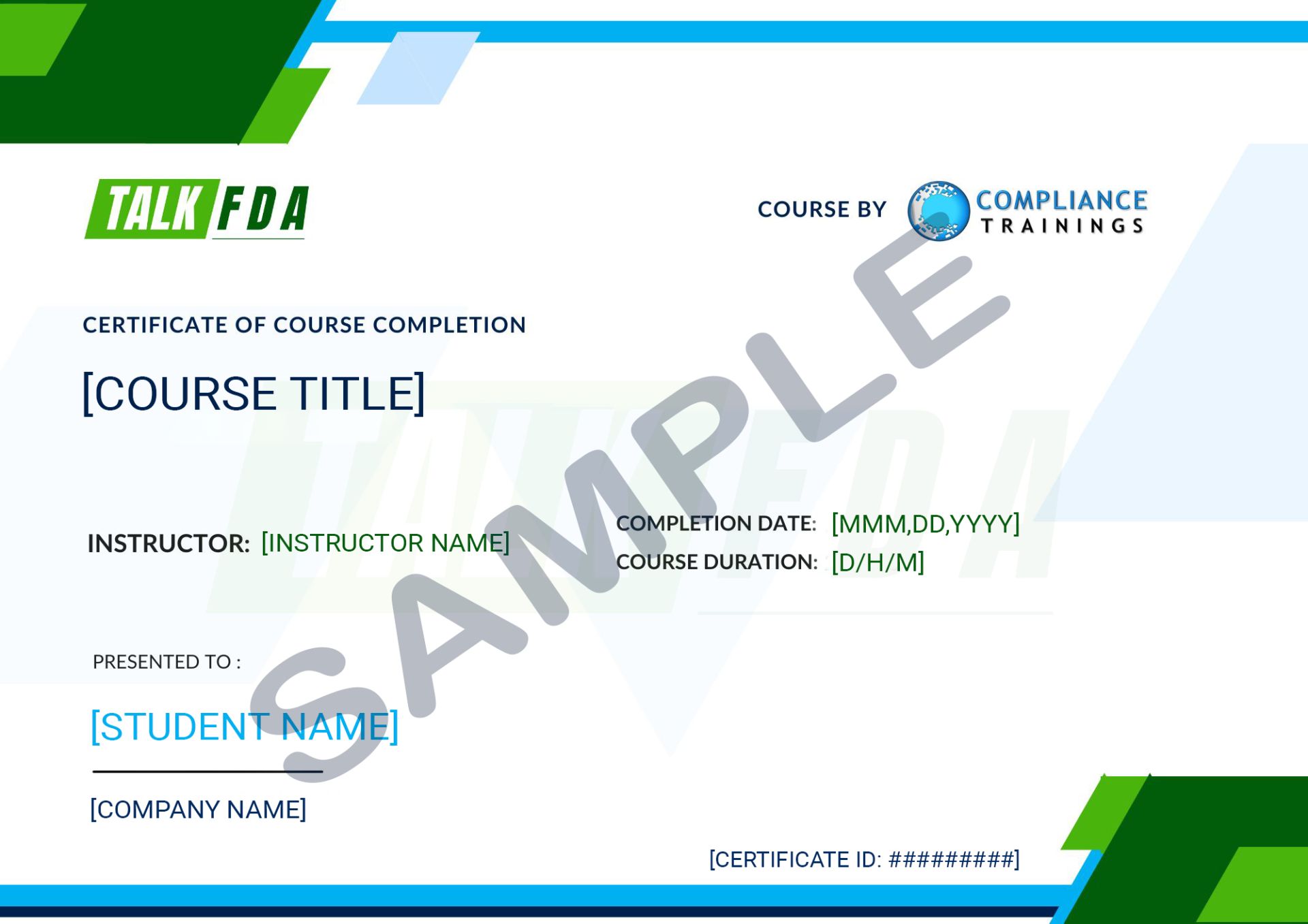
  • Assessment & Certification Included

REGISTRATION OPTIONS

Live session Plus Complimentary 30 Days Streaming access

$190  |  One participant (viewer)

$290  |  Team of up to 5 participants

/* Hide default + / - icon */ .accordion-toggle-icon { opacity: 0; } /* Add circle instead */ .accordion-header::after { content: "○"; font-size: 18px; margin-left: auto; transition: 0.2s ease; } /* When open → filled circle */ .accordion-item.active .accordion-header::after { content: "●"; } /* Hide default + / - icon */ .accordion-toggle-icon { opacity: 0; } /* Add circle instead */ .accordion-header::after { content: "○"; font-size: 18px; margin-left: auto; transition: 0.2s ease; } /* When open → filled circle */ .accordion-item.active .accordion-header::after { content: "●"; } .accordion-header::after { content: "◯"; font-size: 18px; transition: transform 0.25s ease; } .accordion-item.active .accordion-header::after { transform: rotate(90deg); }


Why take this course?

Validation programs continue to generate significant volumes of IQ, OQ, PQ, and PPQ documentation, yet many organizations still face uncertainty when determining whether the evidence produced adequately supports qualification conclusions and ongoing GMP expectations. Increasing regulatory scrutiny has shifted attention beyond protocol completion toward the quality of validation reasoning, the appropriateness of testing approaches, the justification of acceptance criteria, and the traceability of decisions made throughout qualification and process validation activities.


Current expectations place greater emphasis on scientific rationale, risk-based judgment, meaningful evidence, and reliable demonstration of intended system or process performance. Excessive documentation that adds little value, unsupported reductions in testing, weak deviation handling, and fragmented validation narratives can undermine confidence in qualification outcomes. This webinar examines how organizations can better evaluate validation sufficiency, strengthen evidence quality, improve decision-making consistency, and establish qualification practices that remain practical to execute while supporting credible validation conclusions within modern GMP operations.

Evaluating Validation Sufficiency with Greater Consistency

Qualification packages often contain extensive testing records but still leave uncertainty around whether the collected evidence adequately supports intended use. Participants will gain practical approaches for assessing evidence quality, determining appropriate testing depth, and making more consistent qualification decisions as regulatory expectations continue to focus on scientific justification and documented reasoning.

Improving Validation Decisions Under Real-World Constraints

Balancing operational efficiency with validation rigor remains a challenge across manufacturing and quality operations. This session provides practical guidance for handling deviations, supporting reduced verification activities, developing meaningful acceptance criteria, and documenting rationale in a manner that withstands increased scrutiny while remaining practical for ongoing lifecycle management.

Key Areas Covered

  • Current expectations for IQ, OQ, PQ, and PPQ evidence within GMP qualification and validation programs
  • Evaluating the adequacy and relevance of qualification documentation and supporting records
  • Applying risk-based judgment while balancing scientific rationale, efficiency, and validation rigor
  • Recognizing recurring weaknesses that reduce confidence in qualification and process validation outcomes
  • Establishing meaningful acceptance criteria and clear justification for testing activities
  • Managing deviations, discrepancies, and qualification decisions using documented rationale
  • Identifying the difference between evidence that supports performance conclusions and documentation with limited value
  • Building sustainable validation approaches that support consistent qualification practices over time

Who Must Attend

  • Validation and Qualification Teams
  • Quality Assurance (QA) Departments
  • Quality Control (QC) Departments
  • Engineering Departments
  • Technical Operations
  • Manufacturing Departments
  • Regulatory Affairs Departments
  • Process Development and Technology Transfer
  • Compliance and Quality Systems Professionals
COURSE DIRECTOR

Meredith Crabtree

Meredith Crabtree has more than 30 years of experience across pharmaceutical, medical device, laboratory, tissue, plasma, blood, supplement, cosmetic, and animal health operations. Her work includes manufacturing, packaging, labeling, distribution, regulatory assessments, quality consulting, third-party inspections, consent decree support, recall activities, and quality training, providing practical insight into qualification, validation, and evidence-based GMP decision-making.

If you would like to request a Proforma invoice to sign up for this course. please click here

Ready to Strengthen Your Team? Let’s Build Your Training Plan.

Whether you’re looking for a single onsite workshop or a multi-team training series, we’ll help you design a program that fits your goals, timelines, and operational reality.

Your team deserves the clarity.
Your organization deserves the confidence.

Upcoming Courses

Your TalkFDA Webinar Experience

When you reserve your seat, everything is organized for you — from access to certification from one place.

1. Confirmation

You receive a confirmation email and your course appears instantly in your TalkFDA dashboard.

2. Your Course Hub
Your TalkFDA course page becomes your central hub where you can join the session, access materials, and manage your learning.

3. Join the Live Training
At the scheduled time, click Join Session and you’ll be connected to the live Webex session with the instructor.

4. Watch Again Anytime
After the session, the playback becomes available on the same course page so you can revisit important sections.
5. Earn Your Certificate
Complete the course and your certificate is unlocked automatically in your learning history.

Everything related to your webinar: access, materials, playback, and certification — lives in one place.
Simple. Organized. Professional.
Go ahead and reserve your seat with confidence.

Built on 20+ years of global regulatory training experience across FDA, EMA, MHRA, and ICH frameworks.
Trusted by professionals across 80+ countries.

Testimonials

This is an upcoming session. Feedback below reflects experiences from similar programs delivered by our expert faculty.

“Session was easy to follow even for non-core team members. That helped.”
- Production Officer
“Good balance. Not too basic, not too deep. Worked well for mixed team.”
- Manager, Regulatory Affairs
“Team found it useful. Especially for aligning understanding across functions.”
- Director, Operations

Featured Courses