Why take this course?
Electronic Common Technical Document (eCTD) submissions have become the global standard for regulatory applications, with CDER and CBER accepting new applications in eCTD v4.0 format beginning September 16, 2024. Organizations submitting products across multiple regions must understand how CTD requirements translate into electronic submissions while managing version differences, regional variations, and lifecycle updates. Although Module 1 remains region specific, Modules 2 through 5 follow a common structure that supports consistent regulatory review across major markets.
This session examines the operational requirements of CTD, eCTD v3.2.2, and eCTD v4.0 throughout the submission lifecycle. Participants will review the five-module structure, differences between paper and electronic submissions, version transitions, hyperlink navigation, indexing, lifecycle management, and country-specific considerations for FDA, the European Union, Japan, and regions adopting eCTD. Practical attention is given to maintaining complete, organized, and current submissions throughout product development and regulatory maintenance.
Key Areas Covered
John E. Lincoln
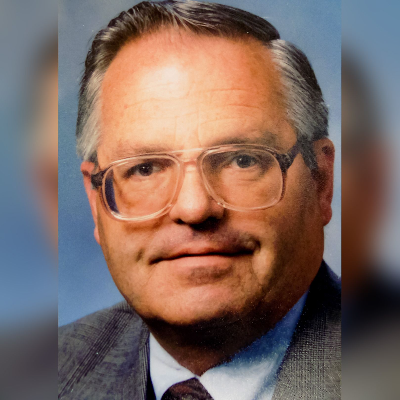
John E. Lincoln has more than 40 years of experience in FDA-regulated industries supporting quality assurance, regulatory affairs, technical documentation, and global regulatory compliance. His work with regulatory submissions, quality systems, product documentation, and international manufacturers provides practical experience directly relevant to CTD and eCTD lifecycle submission management.
Commonly Asked Questions About This Subject
How can organizations maintain a single global submission strategy when regional regulatory expectations continue to differ?
A single global strategy works best when it is built around common scientific content while deliberately managing regional administrative differences. Inspection and regulatory review issues often arise when organizations attempt to force complete uniformity across submissions that are subject to different regional requirements.
Operational problems frequently appear after one region receives updated manufacturing, clinical, or quality information while corresponding submissions elsewhere remain unchanged. Over time, those differences become increasingly difficult to reconcile, particularly during inspections, variation submissions, or responses to agency questions.
Documentation becomes less defensible when regional deviations cannot be traced to documented regulatory requirements or business decisions. Reviewers expect organizations to understand why differences exist rather than discovering inconsistencies through comparison.
Evidence supporting effective global submission management includes documented governance for regional content, controlled change coordination, cross-market impact assessments, and clear traceability between global source documents and country-specific submission components.
What creates the greatest lifecycle management problems after an initial eCTD submission has been accepted?
The initial submission is rarely where long-term complexity develops. Lifecycle management becomes significantly more demanding as supplements, variations, manufacturing changes, updated study reports, labeling revisions, and regulatory commitments accumulate over several years.
Documentation concerns often emerge because each update appears technically correct while gradually weakening the overall structure of the submission. Older documents may remain active when superseded information should have replaced them. Hyperlinks, references, and lifecycle relationships can also become increasingly difficult to maintain.
Reviewers frequently encounter submissions that contain all required information but require unnecessary effort to determine which content represents the current approved position.
Organizations generally maintain stronger lifecycle control by treating every submission as part of a continuously managed regulatory record rather than as an isolated filing. That approach preserves clarity throughout product development, commercialization, and post-approval maintenance.
When should changes to source documentation trigger a broader review of global regulatory submissions?
A practical decision point arises whenever a source document supports multiple regulatory applications across different regions. Updating the originating document without evaluating its broader regulatory impact often creates inconsistencies that remain hidden until agency review or inspection.
Changes involving manufacturing processes, analytical methods, product specifications, stability data, clinical information, or risk assessments may influence numerous submissions simultaneously. Operational difficulties frequently develop because individual regulatory groups implement updates independently according to local priorities or timelines.
Documentation becomes increasingly difficult to defend when different submissions describe the same product using conflicting scientific information that originated from the same source records.
Evidence supporting strong submission governance includes documented global impact assessments, coordinated implementation planning, traceable relationships between source documents and submissions, and records demonstrating that regional updates remain aligned with approved product knowledge.
What distinguishes a well-controlled eCTD operation from one that consistently struggles with submission quality?
A governance concern becomes visible when submission quality depends heavily on experienced individuals rather than documented operational controls. Organizations may repeatedly produce acceptable submissions while relying on institutional knowledge that cannot easily be transferred or consistently repeated.
Inspection and regulatory review difficulties often emerge during staff turnover, accelerated submission timelines, or simultaneous multinational filings. Established informal practices may no longer support consistent execution under increasing workload.
Submission errors frequently originate from weak document governance, inconsistent version management, fragmented responsibilities, or inadequate coordination between regulatory affairs, quality, manufacturing, and development functions rather than from technical deficiencies within the eCTD itself.
Evidence of mature regulatory operations includes standardized submission processes, clearly assigned responsibilities, documented review workflows, controlled source documentation, and periodic evaluation of submission quality trends. Those controls generally provide greater long-term stability than dependence on individual expertise alone.
Your TalkFDA Webinar Experience
1. Confirmation
3. Join the Live Training
4. Watch Again Anytime
Testimonials
Ready to Strengthen Your Team? Let’s Build Your Training Plan.
Your team deserves the clarity.
Your organization deserves the confidence.
Upcoming Courses
Featured Courses