AI in Life Sciences: Use, Risks, and Inspection Readiness
Overview
Artificial intelligence is rapidly entering regulated life sciences environments through document generation, quality systems, investigations, regulatory submissions, manufacturing analytics, clinical operations, and decision-support tools. At the same time, many organizations are still trying to determine where AI can be used safely, what controls are expected, and how these systems may be evaluated during inspections.
As adoption increases, training is shifting away from theoretical discussions toward practical implementation, governance, risk assessment, validation strategy, and defensible operational use.
Where AI Is Already Being Used
AI tools are increasingly appearing across operational and compliance functions, including:
- SOP drafting and document assistance
- Deviation, CAPA, and investigation support
- Quality event summarization and trend analysis
- Regulatory writing and submission support
- Clinical and medical writing workflows
- Supplier and audit data review
- Manufacturing analytics and predictive monitoring
- Chat-based knowledge assistance inside quality systems
- Search, classification, and document retrieval systems
In many cases, organizations are already using AI informally before formal governance structures are fully established.
Why AI Creates New Regulatory Questions
Unlike traditional software systems, AI tools can produce variable outputs depending on prompts, context, training data, and usage conditions. This changes how organizations think about:
- validation boundaries
- intended use definitions
- risk classification
- human review requirements
- traceability and documentation
- data integrity expectations
- ongoing monitoring and change control
The challenge is often not whether AI can be used, but whether teams can justify how it is being controlled inside regulated environments.
What Inspectors Are Likely to Focus On
Although regulatory expectations continue to evolve, inspection readiness increasingly depends on whether organizations can explain:
- where AI is being used
- what decisions AI influences
- how outputs are reviewed
- what controls are in place
- how risks were evaluated
- how usage limitations are communicated
- how consistency and traceability are maintained
Organizations that treat AI as “just another software tool” often underestimate the governance and procedural expectations surrounding its use.
Where AI Training Often Falls Short
Many AI training programs focus heavily on productivity or generic prompt usage without addressing regulated operational realities.
Common gaps include:
- limited discussion of validation strategy
- minimal focus on inspection defensibility
- little alignment with data integrity principles
- lack of guidance around procedural controls
- overreliance on theoretical AI discussions
- insufficient focus on intended use boundaries
In regulated industries, practical governance matters far more than hype.
How Organizations Are Approaching AI Training
Training models are beginning to evolve in response to these challenges.
Some organizations use short-form sessions to understand emerging AI risks and opportunities.
Others rely on workshops and structured programs focused on validation, CSA alignment, SOP integration, risk assessment, and inspection readiness.
There is also growing interest in continuous learning environments that connect AI usage with quality systems, data integrity, validation, cybersecurity, and operational governance over time.
Platforms like TalkFDA support this broader learning approach through a mix of structured programs, short-form learning, expert-led sessions, in-house team training, and industry discussions across regulated life sciences environments.
Final Perspective

TalkFDA Affiliate Program — Terms & Conditions
1. Joining the Program
- By registering, you agree to these terms.
- Approval of applications is at TalkFDA’s sole discretion.
2. Affiliate Commissions
- Commission Rate: 20% of net sales (after refunds/discounts).
- Commission applies to initial purchase and recurring renewals.
- Payments are made monthly via [payment method] after a 30-day refund period.
3. Tracking & Attribution
- Tracking is done via unique Affiliate IDs.
- Last-click attribution is used (the most recent affiliate link gets credit).
- TalkFDA is not responsible for untracked sales caused by ad blockers, browser issues, or customer error.
4. Prohibited Practices
Affiliates must not:
- Use spam, fake accounts, bots, or misleading claims.
- Misrepresent TalkFDA’s services or guarantees.
- Bid on TalkFDA’s name, brand, or trademarks in paid search ads without prior permission.
- Self-refer (you can’t earn commission from your own purchases).
5. Promotion Guidelines
- Affiliates may promote via websites, blogs, social media, email lists (opt-in only).
- Promotion must be professional and respectful to TalkFDA’s reputation.
- Certain content (adult, hate speech, political, illegal) is strictly prohibited.
6. Termination
- TalkFDA reserves the right to suspend or terminate an affiliate account for any breach of these terms, or if the affiliate’s activity harms TalkFDA’s reputation.
- Any unpaid commissions may be forfeited if termination is due to violation of terms.
7. Liability
- Affiliates act as independent promoters and are not employees of TalkFDA.
- TalkFDA is not liable for indirect, special, or consequential damages related to the program.
8. Changes to the Program
- TalkFDA may update commission rates, terms, or program rules at any time.
- Affiliates will be notified of changes by email or via the Affiliate Dashboard.
9. Governing Law
- These terms are governed by the laws of Canada.
Credit Card required to activate Trial.
You won’t be charged unless you choose to continue after the trial period.
Welcome to TalkFDA Learning
Thank you for your purchase!
Some emails from TalkFDA may be filtered by company email systems.
- Please check the Inbox inside My Space (top right corner).
- Add @talkfda.com to your safe sender list.
Access & Support Information
-
Please check your Spam / Junk folder if you don’t receive emails shortly after purchase.
-
In some organizations, emails may be quarantined by IT security systems — you may need to contact your IT team.
-
We recommend adding @talkfda.com to your Safe Senders / Allow List.
Your TalkFDA Webinar Experience
1. Confirmation
3. Join the Live Training
4. Watch Again Anytime
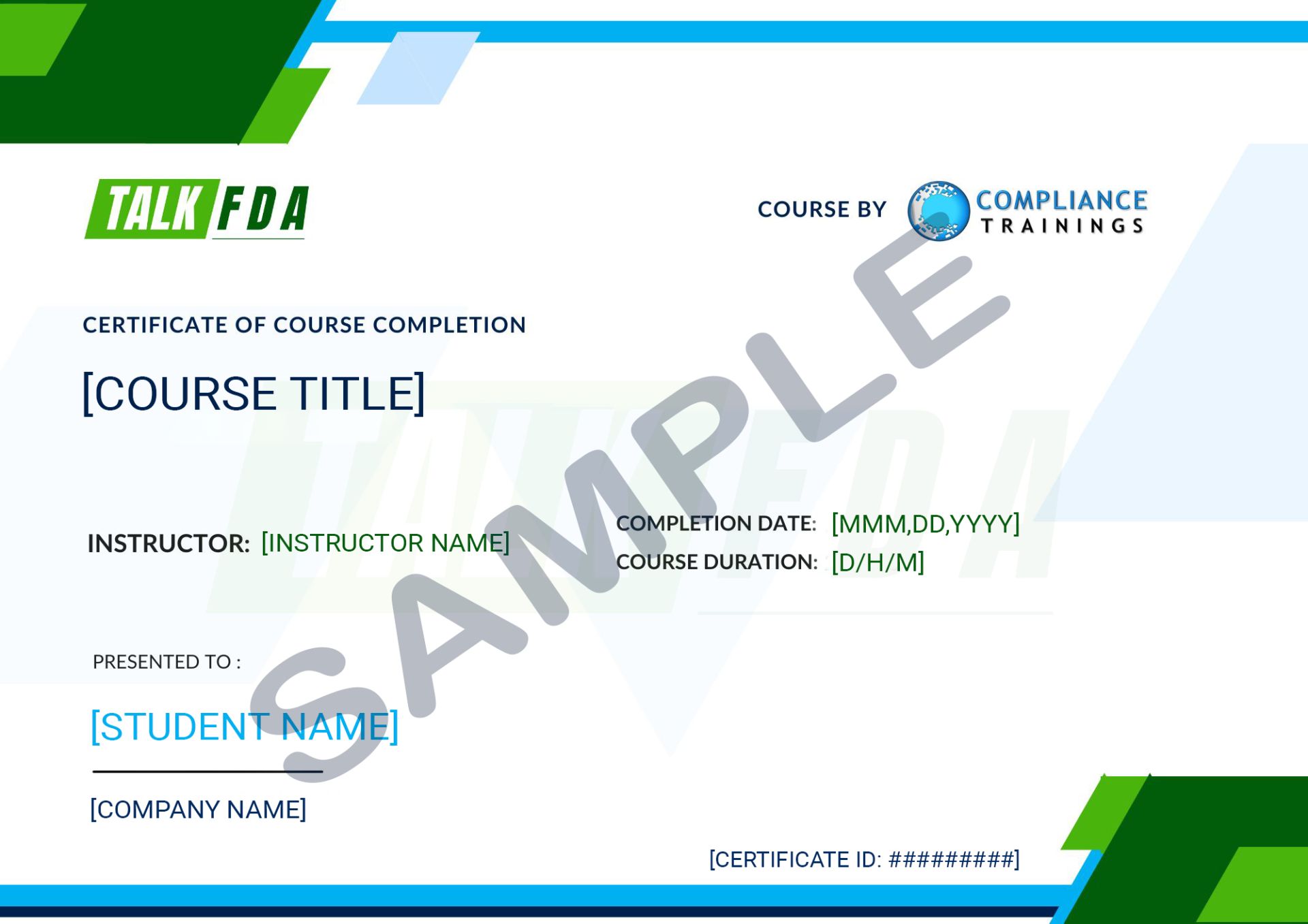
Everything related to your webinar: access, materials, playback, and certification — lives in one place.
This course will be available to watch as soon as registration is completed.